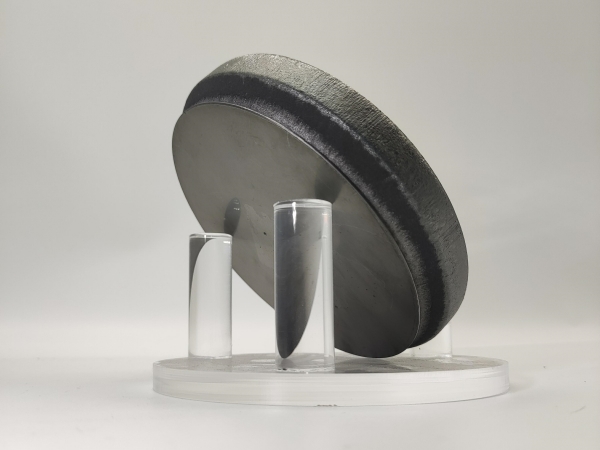
Quartz glass wafers are amorphous materials made from high-purity silicon dioxide (SiO₂) through processes such as electric melting, gas melting or chemical vapor deposition (CVD). With a purity generally above 99.99% and high-end products reaching 99.999% (5N grade) or higher, they possess excellent thermal stability, extremely low thermal expansion coefficient, outstanding optical transmittance and strong chemical inertness. As indispensable key basic materials in the semiconductor field, they run through core links of the entire industrial chain including semiconductor manufacturing, lithography equipment and advanced packaging, with market demand rising continuously as the semiconductor industry advances towards advanced processes.

I. Core Application Scenarios and Market Value
(1) Semiconductor Wafer Manufacturing: Core Process Carriers and Consumables
In the high-temperature processes of semiconductor wafer manufacturing,
quartz glass wafers, relying on their prominent high-temperature resistance, corrosion resistance and low pollution characteristics, serve as core consumables for carrying and auxiliary processing, covering key steps such as diffusion, oxidation and annealing, directly affecting chip yield and performance. Core components like quartz boats and quartz furnace tubes are based on
quartz glass wafers, which can operate stably for a long time at temperatures above 1000℃ without precipitating metal impurities to contaminate the wafer surface.
With the semiconductor industry shifting to 12-inch and larger wafers, higher requirements are put forward for the dimensional accuracy and purity of quartz glass wafers. According to industry data, China's total production capacity of quartz glass wafers exceeded 1.8 million pieces/year in 2025, with the proportion of products used in 12-inch wafer manufacturing continuing to rise. Domestic enterprises such as Feilihua hold a market share of over 40% in 12-inch products, but there is still import dependence on high-end products, with the import dependence rate of quartz glass wafers for 12-inch and above advanced process semiconductor equipment as high as 78%, mainly relying on international giants such as Corning (US) and Heraeus (Germany). In addition, in the manufacturing of advanced structures such as 3D NAND and GAA transistors, SEMI standards clearly require the total content of metal impurities such as sodium and potassium in quartz glass wafers to be controlled below 1ppb, further driving the market demand for high-purity
quartz glass wafers.
(2) Lithography Process: Key Optical and Structural Components
Lithography is the core process of semiconductor manufacturing. Relying on excellent optical transmittance and dimensional stability,
quartz glass wafers become core substrates for optical components and structural parts in lithography equipment, covering two mainstream lithography technologies: deep ultraviolet (DUV) and extreme ultraviolet (EUV). In DUV lithography (193nm ArF excimer laser), quartz glass wafers can be processed into lithography lenses, optical path windows and mask substrates, with a transmittance of over 90% in the deep ultraviolet band to ensure lithography accuracy. In EUV lithography (13.5nm), although quartz glass has strong intrinsic absorption, it can be used as a supporting substrate for key optical components through ultra-clean surface treatment and nanoscale flatness control (Ra≤0.1nm), ensuring lithography resolution.
More than 90% of global
12-inch wafer manufacturing lines rely on high-purity synthetic quartz glass for lithography-related components. With the popularization of EUV lithography technology in 3nm and below advanced processes, requirements for the purity, bubble control and stress uniformity of quartz glass wafers continue to increase, driving the growth of the high-end product market. It is predicted that the global market size of quartz glass materials for semiconductor equipment will grow to 3.65 billion US dollars in 2026, of which the demand contribution from the lithography field exceeds 40%.
(3) Advanced Packaging: High-Precision Supporting and Insulating Substrates
As semiconductor packaging technology evolves towards advanced directions such as Chiplet and wafer-level packaging (WLP), requirements for the accuracy, insulation and thermal stability of packaging substrates have significantly increased. With low dielectric constant (3.8-4.5), high resistivity (≥10¹⁶Ω·cm) and excellent dimensional stability,
quartz glass wafers become ideal substrates in the advanced packaging field. Their main applications include packaging carriers, insulating substrates and test carriers, which can effectively reduce signal transmission loss and improve packaging density and device reliability.
Data shows that in the global semiconductor glass wafer market, the demand in the wafer-level packaging field is growing significantly, with the usage in the US market alone increasing by 48%. Through chemical mechanical polishing (CMP) process, quartz glass wafers can achieve sub-micron thickness tolerance (±1μm) and nanoscale surface flatness (TTV≤0.5μm), perfectly adapting to the strict requirements of advanced packaging for geometric accuracy. Especially in high-end chip packaging, they are gradually replacing traditional glass substrates, with market penetration continuing to rise.
(4) Semiconductor Testing and Auxiliary Links: Standard Calibration and Protective Components
In the semiconductor chip testing link, due to their stable performance and non-deformability,
quartz glass wafers are often made into standard calibration chips for calibrating chip size, surface flatness and defect detection equipment to ensure testing accuracy. Meanwhile, their excellent chemical inertness and plasma corrosion resistance make them suitable for cavity windows and protective liners of semiconductor testing equipment, extending equipment service life and reducing maintenance costs.
In addition, in processes such as ion implantation and plasma etching,
quartz glass wafers can be used as cavity liners and process windows to resist corrosion by highly corrosive and high-energy plasma, avoiding cavity material shedding to contaminate chips and ensuring process stability. In MEMS device manufacturing, relying on good optical and mechanical properties, quartz glass wafers become core substrates for products such as sensors and microfluidic chips, accounting for about 58% of the global demand for quartz glass wafers in the MEMS device field.
II. Market Demand Status and Development Trends
The continuous expansion of the global semiconductor industry and the accelerated introduction of advanced processes are the core driving forces for the growth of the quartz glass wafer market. According to statistics, the global market size of quartz glass materials for semiconductor equipment reached 2.87 billion US dollars in 2023, and is expected to grow to 3.65 billion US dollars in 2026, with a compound annual growth rate of 8.4%. Benefiting from the expansion of domestic wafer fabs and the acceleration of localization substitution, China's market size exceeded 7 billion yuan in 2025, and is expected to climb to more than 13 billion yuan by 2030, with a growth rate significantly higher than the global average.
Domestic enterprises such as Feilihua, Shiying Co., Ltd. and Kaide Quartz are accelerating technological research and capacity expansion, accounting for about 72% of the domestic market. Although domestic enterprises have made phased breakthroughs in large-size and ultra-high-purity products, there is still a gap with the international leading level in key indicators such as bubble control, stress uniformity and surface roughness, and high-purity quartz sand raw materials are highly dependent on imports, with an import dependence rate of over 60%.
The evolution of the semiconductor industry towards 3nm and below advanced processes, 12-inch and above large-size wafers and advanced packaging drives the upgrading of quartz glass wafer products towards high-end and customization. High-purity (metal impurities ≤1ppm), low hydroxyl (OH content ≤10ppm) and bubble-free synthetic
quartz glass wafers are in surging demand, mainly used in high-end fields such as EUV lithography and advanced packaging. Customized quartz glass wafers have become the market mainstream to meet different process needs.
III. Industry Challenges and Opportunities
Currently, the quartz glass wafer industry faces two core challenges: prominent raw material bottlenecks and high technical barriers. High-purity quartz sand is highly dependent on overseas suppliers such as Unimin (US) and TQC (Norway), and high-end product technologies are monopolized by international giants. Meanwhile, the industry also ushered in multiple development opportunities: the global semiconductor production capacity is shifting to China, and national policies support domestic enterprises to break through core technologies. It is expected that in 2026, China's quartz glass wafer industry will enter a stage of structural optimization, with an annual output of 1.85 million pieces and a market size exceeding 4.2 billion yuan, a year-on-year increase of about 19%.
IV. Summary
As key basic materials in the semiconductor field,
quartz glass wafers are applied throughout the whole process of wafer manufacturing, lithography, advanced packaging and testing. With the continuous growth of the global semiconductor industry, the iteration of advanced technologies and the acceleration of localization substitution, the market demand for quartz glass wafers will continue to rise, and the product structure will upgrade towards high-end and customization. In the future, domestic enterprises need to accelerate core technological breakthroughs to enhance their competitiveness in the global market.