As Moore's Law approaches physical limits, the semiconductor industry is accelerating towards the "More than Moore" direction. Advanced packaging (such as 2.5D/3D packaging, Chiplet heterogeneous integration, co-packaged optics (CPO), and HBM stacking) has become a core path to improve chip performance, integration, and energy efficiency. Sapphire glass, quartz glass wafers, and borosilicate glass wafers, as three key inorganic packaging materials, assume different roles in advanced packaging processes and adapt to diverse scenario requirements with their unique physical, chemical, and optical properties. Their core differences lie in composition, key performance, and process adaptability, while their roles revolve around the core packaging needs of support, insulation, heat dissipation, and optical transmission, which are detailed below.
I. Core Differences of the Three Materials (Composition, Performance, and Process Adaptability)
(1) Differences in Composition and Microstructure
The essential differences between the three materials stem from their chemical compositions and microstructures, which are the core reasons for their performance differentiation:
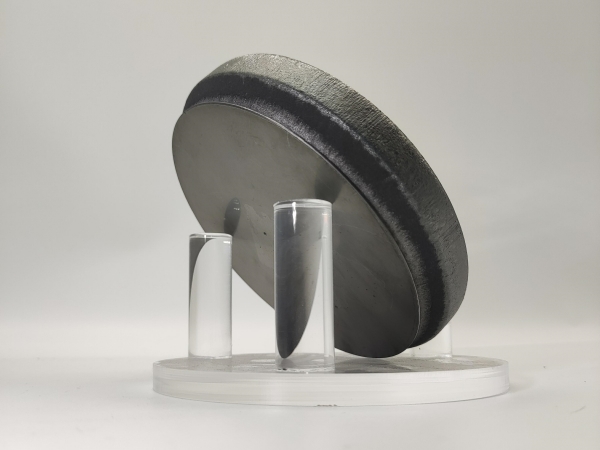
- Sapphire Glass: Its core component is α-alumina (α-Al₂O₃), with a single-crystal structure (hexagonal close-packed crystal, trigonal system). The atoms are highly ordered, and Al-O bonds have both ionic and covalent characteristics with high bond energy and no grain boundary defects. It is not a traditional "glass" (amorphous) but single-crystal alumina, often called sapphire single crystal.
- Quartz Glass Wafers: The core component is high-purity silicon dioxide (SiO₂), with a purity usually over 99%, presenting a completely amorphous structure. The atoms are long-range disordered, forming a continuous silica network structure without obvious grain boundaries. Classified by purity into high-purity, ordinary, and doped types, high-purity fused quartz is mostly used in semiconductor packaging.
- Borosilicate Glass Wafers: Belonging to borosilicate glass, their core components are SiO₂ (content > 80%), B₂O₃ (content ≥ 12%), and a small amount of Na₂O, Al₂O₃, etc. They have an amorphous silicate network structure, where boron atoms participate in network formation, reducing material brittleness and improving thermal stability. Common models include BF33 and BOROFLOAT 33, with a linear thermal expansion coefficient of approximately 3.3×10⁻⁶/K.
(2) Differences in Key Performances (Adapting to Core Packaging Needs)
Advanced packaging has high requirements for materials' thermal conductivity, mechanical strength, coefficient of thermal expansion (CTE), dielectric properties, optical properties, and chemical stability. The three materials differ significantly in these key performances, as shown in the following table (all data are standard values at room temperature unless otherwise specified):
| Performance Indicators |
Sapphire Glass |
Quartz Glass Wafers |
Borosilicate Glass Wafers |
| Thermal Conductivity (W/m·K) |
30–40, anisotropic, the highest among the three |
1.3–1.4, extremely low, severe phonon transmission obstruction |
Approx. 1.1, lower than sapphire and slightly lower than quartz glass |
| Mechanical Strength (Mohs Hardness) |
Grade 9, second only to diamond and silicon carbide, Vickers hardness 1800–2200 HV |
Grade 7, Vickers hardness 500–600 HV, high brittleness |
Approx. Grade 5.5, Knoop hardness 480 HK, moderate mechanical strength |
| CTE (×10⁻⁶/K, 25–300℃) |
5~7, certain mismatch with silicon (2.6), optimizable via crystal orientation |
0.5~0.55, extremely low, poor matching with silicon, high interfacial thermal stress |
Approx. 3.3, highly matched with silicon (2.6), adjustable via formula |
| Dielectric Properties (10 GHz) |
Relative permittivity 9.5–11.5 (anisotropic), dielectric loss < 0.0001 |
Relative permittivity 3.8, low dielectric loss, excellent high-frequency performance |
Relative permittivity 4.6 (1 MHz), dielectric loss 37×10⁻⁴, slightly higher than the previous two |
| Optical Properties |
Broad spectrum transmission (ultraviolet to mid-infrared), excellent light transmittance |
Excellent transmission from deep ultraviolet to near-infrared, better transmittance with higher purity |
Light transmittance ≥ 90%, good visible light transmittance, extremely low fluorescence |
| Chemical Stability |
Extremely high, acid and alkali resistant, corrosion resistant, strong chemical inertness |
Excellent, strong acid resistance (except hydrofluoric acid and hot phosphoric acid), alkali intolerant |
Good, acid resistance second only to quartz, good water and alkali resistance, low alkali content |
| Processing Characteristics |
Extremely high hardness, requiring diamond tools for cutting and grinding, high processing cost |
Precision etchable and drillable, high brittleness, requiring crack prevention during processing |
Precision machinable and chemically etchable, low processing difficulty, moderate cost |
| Cost |
Extremely high, complex single-crystal growth process (mainstream is modified Czochralski method) |
Medium-low, slightly higher for high-purity models |
Moderate, outstanding cost-performance, scalable production |
(3) Differences in Process Adaptability
Advanced packaging processes (such as wafer-level packaging (WLP), TSV vertical interconnection, hybrid bonding, CPO, etc.) have different requirements for material processing precision, thermal matching, and interconnection compatibility, leading to obvious differences in the applicable scenarios of the three materials:
- Sapphire Glass: Suitable for high-temperature, high-power, and high-precision packaging scenarios, capable of withstanding high-temperature annealing, plasma etching, and other processes during packaging. However, its high processing difficulty makes it hard to achieve complex microstructures (such as high aspect ratio vias), so it is not suitable for large-scale, low-cost packaging processes, but more for small-batch, high-performance demand scenarios. Currently, it can stably process 8-12-inch wafers with a thickness range of 0.7-2mm or more, and can also provide panel-shaped products to meet wafer-level and panel-level packaging needs.
- Quartz Glass Wafers: Suitable for high-frequency and optical-related packaging scenarios, capable of making TSV vias through laser drilling and wet etching, suitable for precision interconnection. However, its low thermal conductivity limits the adaptation of high-power devices, and its ultra-low CTE leads to poor thermal matching with other packaging materials (such as copper interconnection layers), which is prone to interfacial stress cracking. It is mainly suitable for medium-low power, high-frequency optical packaging processes. It can achieve multiple size specifications and support temporary carrier applications in wafer-level packaging.
- Borosilicate Glass Wafers: Suitable for large-scale, high-density advanced packaging scenarios, capable of achieving high aspect ratio vias through laser-induced deep etching, supporting redistribution layers with line width and spacing less than 2μm. Its CTE is highly matched with silicon chips, enabling anodic bonding with silicon wafers. With low processing difficulty and moderate cost, it is suitable for mainstream advanced packaging processes such as 2.5D/3D packaging and Chiplet integration, and is one of the key glass substrate materials focused on by current giants. It can provide 2-14-inch wafers with low thickness tolerance and surface roughness Ra below 1nm, meeting high-precision packaging needs.
II. Specific Roles of the Three Materials in Advanced Packaging Processes
The roles of the three materials all revolve around the five core needs of advanced packaging: "support and fixation, insulation and isolation, heat dissipation and conduction, signal transmission, and optical adaptation". Based on their performance differences, they have clear divisions of labor and strong complementarity, with specific roles as follows:
(1) Sapphire Glass: "Performance Leader" in High-End Scenarios
With high thermal conductivity, high hardness, high chemical stability, and excellent optical properties, sapphire glass is mainly used in high-end, special-demand advanced packaging scenarios, with core roles focusing on thermal management and high-precision support, including:
- Thermal Management Components for High-Power Devices: Used in the packaging of devices with heat flux density exceeding 100 W/cm², such as GaN RF power amplifiers and AI acceleration chips. As a heat diffusion layer or packaging substrate, it can significantly reduce hot spot temperature, with a junction temperature reduction of 15-40℃, greatly improving device reliability and performance stability. The core advantage of its high thermal conductivity is the long phonon mean free path brought by the single-crystal structure, reducing phonon scattering.
- Core Carrier for Co-Packaged Optics (CPO): As an optical window, optical waveguide substrate, or laser carrier substrate, it has both broad-spectrum transmittance and high thermal conductivity, enabling simultaneous optical signal transmission, optical path adjustment, and heat dissipation functions. It solves the heat dissipation bottleneck in photoelectric integration and adapts to the close integration needs of silicon photonics chips, lasers, and modulators.
- High-Precision Packaging Support and Protection: With extremely high surface hardness (Ra < 0.5 nm) and rigidity (elastic modulus 345–420 GPa), it can be used as a precision bonding surface or packaging cover plate to prevent scratches and wear during packaging, while suppressing substrate warpage, ensuring the alignment accuracy of micron-level interconnection structures such as microbumps and hybrid bonding, and improving packaging yield.
- Special Environment Packaging Protection: In high-temperature, strong-corrosion packaging processes or application environments, as an insulation layer or packaging shell, it uses its excellent chemical inertness and high-temperature resistance (long-term tolerance to 1800℃ high temperature) to protect chip dies from external environmental impacts, adapting to semiconductor packaging needs in special fields such as aerospace and extreme industry.
(2) Quartz Glass Wafers: "Specialized Carrier" for High-Frequency and Optical Packaging
With low dielectric loss, excellent optical transmittance, and chemical stability as core advantages, quartz glass wafers are mainly used in high-frequency and optical-related advanced packaging scenarios, with core roles focusing on signal integrity and optical adaptation, including:
- Interposer for High-Frequency Devices: Used to connect multiple chips and substrates in 2.5D/3D packaging. With low relative permittivity (3.8) and low dielectric loss, it reduces high-frequency signal crosstalk and delay, improving high-speed signal integrity. It adapts to high-frequency packaging needs such as 5G/6G RF filters, radars, and millimeter-wave devices, and is an ideal insulating material for high-performance RF devices.
- TSV Carrier and Insulation Substrate: Vertical vias are made through laser drilling or wet etching to serve as TSV insulation substrates. Using its excellent insulation with high resistivity (> 10¹⁶ Ω·cm), it avoids leakage, adapts to high-density vertical interconnection needs, and ensures the stability of signal transmission between chips. At the same time, its low CTE can reduce via deformation caused by thermal cycles.
- Optical and MEMS Device Packaging: As an optical waveguide substrate for photonic integrated circuits (PICs), it is used for the coupling and packaging of optical fiber communication chips. With excellent transmission from deep ultraviolet to near-infrared, it supports optical signal transmission and alignment. At the same time, it can form a vacuum seal with silicon wafers through anodic bonding, serving as a packaging substrate for MEMS devices (such as accelerometers and micromirrors) to protect microstructures, and its transparency facilitates the debugging and integration of optical MEMS.
- Temporary Carrier for Wafer-Level Packaging: Provides support during thin wafer processing to avoid wafer warpage or breakage. After completing processes such as backside thinning, it can be peeled off by laser or thermal sliding, adapting to the large-scale production needs of wafer-level packaging (WLP). Its chemical stability can avoid reactions with packaging adhesives and etching solutions, ensuring process purity.
(3) Borosilicate Glass Wafers: "Mainstream Carrier" for Large-Scale Advanced Packaging
With good thermal matching, low processing difficulty, and high cost-performance, borosilicate glass wafers have become one of the mainstream materials in the current advanced packaging field (especially Chiplet and HBM stacking), with core roles focusing on high-density interconnection and large-scale support, including:
- Core Material for Advanced Packaging Substrates: As the core substrate for 2.5D/3D packaging and Chiplet heterogeneous integration, it replaces traditional organic substrates and silicon interposers. Its CTE is highly matched with silicon chips, which can reduce chip warpage by 50%-70%. At the same time, it has high Young's modulus (63-67 kN/mm²) and strong deformation resistance, supporting large-size packaging (such as Intel's 78mm×77mm glass substrate), solving the pain points of traditional substrate warpage and size limitation.
- High-Density Interconnection Carrier: Through laser-induced deep etching, high aspect ratio vias can be achieved, supporting redistribution layers with line width and spacing less than 2μm, increasing interconnection density by 10 times and reducing high-frequency signal transmission loss by 40%. It adapts to high-density, high-bandwidth packaging needs such as AI chips and HBM4 memory, and is one of the core materials for advanced packaging technologies such as TSMC's CoPoS and Intel's EMIB.
- Packaging Substrate for MEMS and Sensors: With good anodic bonding performance with silicon chips and low fluorescence characteristics, it serves as a packaging substrate for MEMS devices and biosensors, forming a strong, airtight inner cavity to protect microstructures. At the same time, its low fluorescence characteristics are suitable for reducing signal interference in component detection and biological fields, and its excellent chemical stability can avoid reactions with biological reagents and detection reagents.
- Low-Cost Large-Scale Packaging Carrier: With low processing difficulty and moderate cost, it can achieve large-scale production of 8-12-inch large-size wafers, adapting to the mass production needs of terminal manufacturers such as Apple and Samsung. At the same time, its high-temperature resistance (long-term working at 450℃) and strong thermal shock resistance can withstand high-temperature processes during packaging, improving packaging efficiency and yield, and it is one of the core development directions of future glass packaging substrates.

III. Summary: Core Differences and Application Scenario Positioning
The positioning of the three materials in advanced packaging processes is essentially a match of "performance-cost-scenario", with the core summary as follows:
- Sapphire Glass: "High-end and niche", with high thermal conductivity, high hardness, and excellent optical properties as core advantages. It adapts to high-end scenarios such as high power, CPO, and special environments, with extremely high cost, suitable for small-batch, high-performance needs, and is the "performance leader" in high-end device packaging.
- Quartz Glass Wafers: "Professional and segmented", with low dielectric loss and excellent optical transmittance as core advantages. It adapts to segmented scenarios such as high frequency, optics, and MEMS, with moderate cost. Its shortcomings are low thermal conductivity and poor thermal matching, and it is the "specialized carrier" for high-frequency and optical packaging.
- Borosilicate Glass Wafers: "Mainstream and general-purpose", with good thermal matching, convenient processing, and high cost-performance as core advantages. It adapts to large-scale advanced packaging scenarios such as 2.5D/3D packaging, Chiplet, and HBM stacking, is the direction focused on by current industry giants, and is the "mainstream carrier" for large-scale packaging.
As advanced packaging evolves towards higher density, higher power, and higher integration, the three materials will further exert their complementary advantages: sapphire glass will focus on high-end thermal management and photoelectric integration, quartz glass will adhere to the high-frequency and optical segmented fields, and borosilicate glass will dominate large-scale high-density packaging, jointly promoting the iterative upgrading of advanced semiconductor packaging technology.