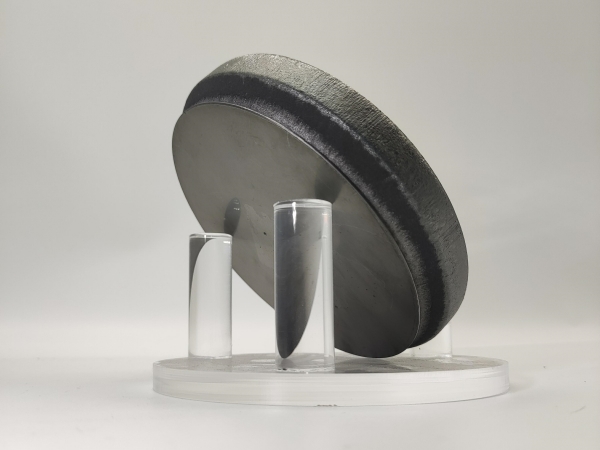
As third- and fourth-generation semiconductor technologies continue to advance, the demand for materials capable of operating under extreme conditions—such as high temperature, high voltage, and high frequency—has grown significantly. Among the emerging wide-bandgap semiconductor materials, diamond has attracted considerable attention due to its exceptional physical properties and is widely regarded as a promising candidate for next-generation high-power electronic devices.
Why Diamond Is Considered the “Ultimate Semiconductor”
Compared with conventional silicon-based materials, diamond offers several outstanding advantages, including:
- Ultra-wide bandgap
- Extremely high thermal conductivity
- Exceptional breakdown electric field strength
- Superior carrier mobility
These characteristics make diamond highly attractive for applications in high-power-density electronics, RF communications, aerospace systems, and harsh-environment electronics.
In particular, hydrogen-terminated diamond (H-diamond) devices have become a major focus of recent research. Traditional diamond electronics have long faced challenges associated with the high activation energy of dopants. H-terminated diamond overcomes this limitation by forming a two-dimensional hole gas (2DHG) conductive channel on the surface, enabling efficient carrier transport without relying heavily on conventional doping methods.
As a result, H-diamond MOSFETs are increasingly viewed as one of the most promising device architectures in advanced wide-bandgap semiconductor research.
High Performance Achieved, but Stability Challenges Remain
In recent years, hydrogen-terminated diamond field-effect transistors have demonstrated impressive performance metrics, including:
- Ampere-level current density
- GHz-range RF power output
- Breakdown voltages exceeding 2000 V
These achievements highlight the strong potential of H-diamond devices for next-generation high-power and high-frequency applications.
However, device reliability and dynamic stability remain critical challenges. In particular, carrier trapping effects leading to hysteresis and transfer curve drift continue to limit practical deployment and long-term operational stability.
Previous studies have primarily focused on interface states at the Al₂O₃/diamond interface, while the overall trap-response mechanism within the MOS structure has not yet been systematically clarified.
Zhengzhou University Team Investigates Abnormal Transfer Curve Drift
Recently, the research group led by Zhengzhou University published a study titled
“Abnormal transfer curve drift in hydrogen-terminated diamond metal-oxide-semiconductor field-effect transistors” in Diamond & Related Materials, focusing on trap effects in H-diamond MOSFETs.
The researchers fabricated H-diamond MOSFET devices based on single-crystal diamond substrates, employing Al₂O₃ as the gate dielectric layer deposited via atomic layer deposition (ALD).
During electrical characterization, the team observed an unusual phenomenon:
- Under short-interval consecutive voltage sweeps, the transfer curves exhibited significant drift;
- When longer intervals were introduced between measurements, the device characteristics gradually recovered to their normal state.
These observations indicate that device behavior is not only bias-dependent, but also strongly influenced by time-dependent carrier trapping and detrapping processes.

Figure 1. (a) Schematic illustration of the H-diamond MOSFET. (b) Typical output characteristics of the fabricated device. Transfer characteristics of the fabricated device under (c) abnormal conditions and (d) normal conditions.

Figure 2. (a) C–V characteristics of the H-diamond MOS capacitor measured at frequencies ranging from 10 kHz to 1 MHz. (b) C–V hysteresis characteristics of the H-diamond MOS capacitor measured at 1 MHz.
Trap Effects Identified as the Key Origin of Dynamic Instability
To further investigate the underlying mechanism, the researchers combined several characterization techniques, including:
- C-V measurements
- Pulsed I-V analysis
- Transient current measurements
Through these studies, the team systematically analyzed the carrier capture behavior within the H-diamond MOS structure.
The results clearly demonstrate that the abnormal transfer curve drift primarily originates from hole trapping by defects inside the gate dielectric layer.
More importantly, the study provides, for the first time:
- The time constants associated with dominant traps
- The spatial distribution information of trap states within the device
These findings establish an important foundation for developing more accurate dynamic models of H-diamond MOSFETs.
Implications for Future Diamond Power Electronics
This work not only advances the understanding of dynamic instability mechanisms in H-diamond MOSFETs, but also provides valuable guidance for future device optimization.
According to the study, device reliability and performance may be further improved through:
- Reducing defect density at the dielectric/diamond interface
- Optimizing ALD dielectric deposition processes
- Minimizing surface adsorbates
- Suppressing trap formation mechanisms
As these challenges are progressively addressed, H-diamond devices are expected to unlock greater potential in high-power, high-frequency, and harsh-environment electronic systems.
From a broader perspective, diamond semiconductor technology represents one of the most promising directions for future ultra-wide-bandgap electronics. The findings reported in this study contribute valuable experimental data and analytical insights that may help accelerate the transition of diamond power electronics from laboratory research to real-world applications.
Diamond Material Solutions from JXT Technology Co.,Ltd.
JXT Technology Co.,Ltd. supplies a wide range of high-quality diamond materials, including:
These materials are suitable for various advanced applications, such as:
- Diamond power electronic devices
- High-frequency RF devices
- Thermal management materials for semiconductors
- Optical windows and laser systems
- MEMS devices
- Quantum devices and sensors
- Advanced cutting and wear-resistant applications
Customized thicknesses, dimensions, and specifications are available to meet the requirements of research institutions, universities, and industrial customers.
For more product information and technical support, please feel free to contact us:
anna@jxtwafer.comRelated products:
Single-crystal diamond substrates Polycrystalline diamond substrates Diamond thin films