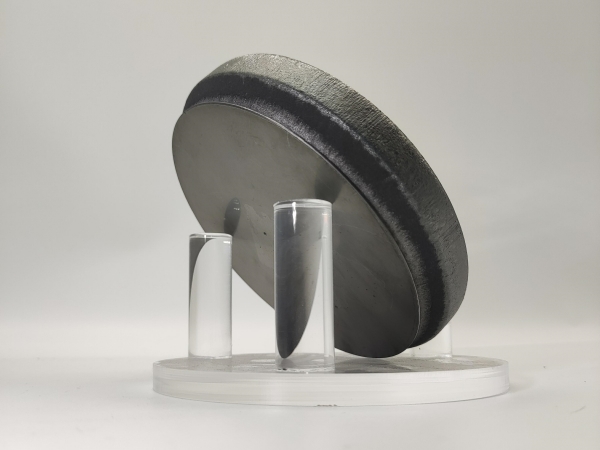
The hardness of crystalline materials is one of the most critical factors determining the selection of cutting, grinding, and polishing processes. It directly influences machining efficiency, tool wear, process parameters, cost control, and final product quality. Differences in hardness significantly affect tool selection, machining stress, defect control, and achievable surface quality.
This article analyzes four typical crystalline materials—sapphire, silicon carbide, silicon wafers, and quartz—from the perspective of hardness characteristics, and systematically examines how these properties influence machining processes and the corresponding optimized processing methods.

1. Core Hardness Characteristics of Four Crystal Materials
| Material |
Mohs Hardness |
Vickers Hardness
(HV) |
Key Hardness Characteristics |
Additional Properties Affecting Machining |
| Sapphire (Al₂O₃ single crystal) |
9.0 |
2000–2300 HV |
Extremely high hardness, second only to diamond; moderate brittleness; relatively low fracture toughness |
Excellent chemical stability, corrosion resistance, and strong hardness retention at high temperatures |
| Silicon Carbide (SiC single crystal) |
9.5 |
2400–2800 HV |
Hardness close to diamond; highly brittle; fracture toughness slightly higher than sapphire |
High mechanical strength, high-temperature resistance, excellent thermal shock resistance; prone to stress cracks during machining |
| Silicon Wafer (single-crystal Si) |
6.5–7.0 |
1100–1300 HV |
Moderate hardness; combination of brittleness and plasticity; strong anisotropy |
Good machinability; easily achieves high flatness through CMP; surface prone to oxidation |
| Quartz (amorphous SiO₂) |
7.0 |
800–1000 HV |
Moderate-to-low hardness; highly brittle; hardness uniformity lower than single crystals |
Extremely low thermal expansion coefficient, strong resistance to temperature variations, resistant to most chemicals except hydrofluoric acid |
2. Impact of Hardness on Cutting, Grinding, and Polishing Processes
(1) Sapphire: “Specialized Tooling + Low-Stress Processing” Under Extremely High Hardness
Cutting
Due to sapphire’s extremely high hardness, conventional cutting tools wear rapidly. Standard cutting methods often cause
edge chipping and cracks.
Recommended process:
Electroplated diamond wire sawWire diameter:
0.12–0.18 mmDiamond particle size:
3–5 μmWire speed:
10–15 m/sFeed rate:
0.05–0.1 mm/minSpecialized coolant containing
polyethylene glycol and SiC micropowder is used to reduce cutting temperature and stress, controlling edge chipping within
≤50 μm.
Laser cutting is generally
not recommended due to the formation of thick heat-affected layers. Only
femtosecond laser cutting is suitable for complex shapes, followed by grinding to remove the damaged layer.
Grinding
The main challenge is
removing cutting damage while minimizing tool wear.
Typical staged grinding process:
Coarse grinding: 15–20 μm diamond slurry, cast iron plate, pressure 0.1–0.2 MPa
Medium grinding: 5–8 μm diamond slurry, cemented carbide plate
Fine grinding: 1–3 μm diamond slurry, pressure <0.05 MPa
Adequate cooling is essential with slurry circulation
≥5 L/min to prevent thermal cracking.
Polishing
Sapphire polishing requires both
material removal efficiency and nanometer-level surface quality.
Typical method:
Chemical Mechanical Polishing (CMP)Parameters:
Diamond colloidal slurry:
0.1–0.5 μmPolyurethane polishing pad
Pressure:
0.03–0.08 MPaRotation speed:
30–50 rpmChemical reactions form a thin oxide film that is mechanically removed, enabling
surface roughness Ra ≤ 0.2 nm without subsurface damage.
(2) Silicon Carbide: Ultra-High Hardness and High Brittleness
Silicon carbide presents one of the
most difficult machining challenges among semiconductor materials.
Cutting
The key challenge is
suppressing crack propagation.
Recommended parameters:
Diamond wire diameter:
0.10–0.15 mmDiamond particle size:
2–4 μmWire speed:
15–20 m/sFeed rate:
0.03–0.08 mm/minA
high-viscosity coolant containing antioxidants and stress-dispersing agents maintains cutting temperatures below
50°C and limits edge chipping to
≤30 μm.
For
6-inch or larger wafers,
dual-wire synchronous cutting technology improves flatness and reduces wafer warping.
Grinding
Grinding pressure must be strictly controlled to avoid brittle fracture.
Process example:
Coarse grinding: 20–30 μm diamond slurry, pressure 0.08–0.15 MPa
Intermediate grinding: 8 μm → 3 μm → 1 μm diamond abrasives
Defects must be inspected after each stage using
laser confocal microscopy.
Because SiC is highly corrosion-resistant, grinding fluids typically contain
no chemical additives, but abrasive dispersion must remain uniform.
Polishing
Due to extreme hardness, SiC polishing efficiency is low and scratches easily occur.
Recommended
two-step polishing process:
Diamond mechanical polishing0.1 μm diamond colloid
Pressure: 0.05 MPa
Speed: 40 rpm
Plasma-Assisted Polishing (PAP)Plasma performs atomic-level surface etching to correct micro-topography.
Final results:
Surface roughness:
Ra ≤ 0.1 nmSubsurface damage layer:
≤50 nmCompared with traditional CMP, this method improves efficiency by
more than 30% while reducing tool wear.
(3) Silicon Wafers: Efficient and Cost-Effective Conventional Processing
Cutting
Silicon wafers have moderate hardness and excellent machinability.
Typical wire saw parameters:
Wire diameter:
0.18–0.25 mmDiamond size:
5–8 μmWire speed:
8–12 m/sFeed rate:
0.15–0.3 mm/minStandard emulsified coolant is sufficient, and edge chipping can be controlled within
≤40 μm.
Because silicon is
anisotropic, cutting direction must align with the crystal orientation, typically
<111> or <100>, to maintain surface uniformity.
Grinding
Grinding is relatively simple and uses low-cost abrasives.
Typical process:
Coarse grinding: SiC abrasive (10–20 μm), resin plate, pressure 0.2–0.3 MPa
Fine grinding: Al₂O₃ abrasive (3–5 μm), soft plate, pressure ~0.1 MPa
Silicon’s partial plasticity reduces brittle fracture risk, and cooling requirements are moderate.
Polishing
Silicon wafers benefit from
highly mature CMP technology, enabling high efficiency and low cost.
Typical CMP parameters:
Silica slurry:
0.05–0.1 μmFoam polyurethane pad
Pressure:
0.1–0.15 MPaSpeed:
50–60 rpmThe chemical reaction forms a thin
SiO₂ film, which is mechanically removed to achieve:
Surface roughness
Ra ≤ 0.1 nmPolishing time
≤30 minutes per waferPost-polishing cleaning is essential to remove residual silica slurry and prevent oxidation.
(4) Quartz: Precision-Oriented Processing for Brittle Materials
Cutting
Although quartz is slightly softer than silicon, it is
extremely brittle.
Two main cutting methods:
Diamond wire sawingWire diameter:
0.15–0.20 mmDiamond size:
4–6 μmWire speed:
10–14 m/sFeed rate:
0.08–0.15 mm/minCO₂ laser cutting for complex shapes
Wavelength:
10.6 μmCutting speed:
0.5–1 m/minLaser processing generates a
1–2 μm damaged layer, which must be removed by grinding.
Grinding
Soft abrasives and low-pressure processes are preferred.
Coarse grinding: Al₂O₃ (15–20 μm), resin plate, pressure 0.08–0.12 MPa
Fine grinding: CeO₂ (3–5 μm), felt pad, pressure <0.05 MPa
Neutral coolant prevents chemical reactions with quartz.
Polishing
Quartz polishing focuses on
optical transparency and surface flatness.
Typical optical polishing process:
Cerium oxide slurry:
0.05–0.1 μmPitch polishing pad
Pressure:
0.03–0.06 MPaSpeed:
30–40 rpmOptimizing slurry pH improves chemical-mechanical synergy, achieving:
Surface roughness
Ra ≤ 0.05 nmOptical transmittance
≥90% (UV–IR range)No scratches or stress cracks
3. Comparative Summary of Processing Characteristics
| Processing Aspect |
Sapphire |
Silicon Carbide |
Silicon Wafer |
Quartz |
| Tool requirements |
High-hardness diamond tools |
Ultra-performance diamond tools |
Standard diamond or alumina tools |
Soft abrasive tools |
| Machining efficiency |
Low |
Very low |
High |
Medium |
| Main defect risks |
Edge chipping, subsurface cracks |
Stress cracks, surface scratches |
Crystal orientation deviation, oxidation |
Chipping, laser damage layer |
| Processing cost |
Medium–high |
Very high |
Low |
Medium |
| Recommended process mode |
Specialized equipment + CMP |
High-precision equipment + PAP |
Conventional equipment + mass CMP |
Optical equipment + soft polishing |
Conclusion
The hardness characteristics of crystalline materials fundamentally determine their machining strategies and processing challenges.
Ultra-hard materials such as silicon carbide and sapphire require high-performance tools, low-stress processes, and precision equipment. Processing efficiency is relatively low, costs are high, and defect control focuses on
cracks and scratches.
Moderate-hardness materials such as
silicon wafers and quartz benefit from mature machining technologies, allowing higher efficiency and lower cost. The primary concerns shift to
crystal orientation deviation, edge chipping, and surface damage layers.
In practical manufacturing, process optimization must be based on
material hardness, target precision, production scale, and cost constraints. By carefully selecting tools, process parameters, and cooling strategies, manufacturers can achieve the optimal balance between
processing efficiency and product quality.