In advanced optical systems, the choice of substrate material has a direct impact on optical transmission efficiency, system stability, and long-term reliability. Fused silica wafers and sapphire substrates are two widely used high-performance materials in optical applications, including lasers, optical communications, precision inspection, and semiconductor optics. While both offer excellent physical and optical properties, they differ significantly in performance characteristics and application focus.
Material Structure and Fundamental Properties
Fused silica wafers are manufactured by melting high-purity silicon dioxide (SiO₂) at high temperatures, resulting in an amorphous structure with excellent material uniformity and strong isotropic behavior. This structural characteristic ensures highly consistent optical performance and minimizes optical deviations caused by crystallographic orientation.
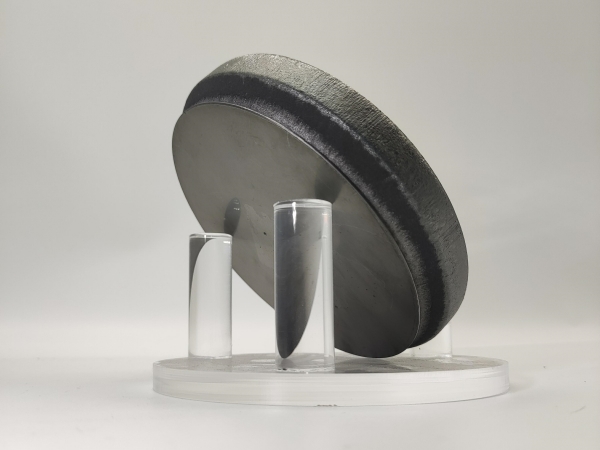
Sapphire substrates, on the other hand, are made from single-crystal aluminum oxide (Al₂O₃). They feature a well-defined crystalline structure and inherent anisotropy. While sapphire offers outstanding mechanical strength and thermal resistance, its crystallographic nature requires additional consideration in precision optical applications.
Optical Transmission Range and Uniformity
In terms of spectral transmission, fused silica wafers exhibit excellent and stable transmittance across deep ultraviolet (DUV), ultraviolet (UV), visible, and near-infrared (NIR) wavelengths. Their superior performance in the UV region makes them a preferred material for UV optical systems and advanced photolithography equipment.
Sapphire substrates also provide good transmission in the visible and UV ranges; however, their transmittance in the deep UV region is relatively limited. Additionally, birefringence caused by crystal anisotropy may affect beam uniformity in applications requiring high optical consistency.
Refractive Index and Optical Design Compatibility
Fused silica features a relatively low refractive index with smooth wavelength dispersion, enabling precise optical design and effective aberration control. These properties make it particularly suitable for optical windows, beam collimation components, and precision measurement systems.
Sapphire has a higher refractive index and more pronounced dispersion. While this can be advantageous in high numerical aperture (NA) or high-power optical designs, it also increases the complexity of system design and compensation.
Laser Damage Resistance and Thermal Effects
In laser applications, fused silica wafers offer low optical absorption and a low coefficient of thermal expansion. These characteristics help suppress thermal lensing and beam distortion under high energy density, making fused silica ideal for optical windows and protective components in both continuous-wave and pulsed laser systems.
Sapphire substrates provide superior mechanical robustness and high-temperature tolerance, ensuring stable performance in harsh, high-power laser environments. As a result, sapphire is commonly used in high-power laser protection windows and demanding industrial optical applications.
Surface Processing and Optical Quality
Fused silica wafers can be polished to achieve exceptional surface flatness and ultra-low surface roughness, supporting high-precision polishing and coating processes. This contributes to reduced scattering losses and improved imaging quality in optical systems.
Due to its high hardness, sapphire is more challenging to process. Although excellent surface quality can be achieved, the required processing complexity and cost are significantly higher. Sapphire is therefore more suitable for optical components where extreme mechanical durability is essential.
Typical Optical Application Comparison
| Application Area |
Fused Silica Wafers |
Sapphire Substrates |
| UV optical windows |
Primary choice |
Limited use |
| Photolithography & precision imaging |
Widely used |
Secondary |
| Laser system windows |
Commonly used |
High-power applications |
| Optical protective windows |
Suitable |
Suitable |
| High beam uniformity systems |
Clear advantage |
Crystal orientation dependent |
| High mechanical strength requirements |
Moderate |
Clear advantage |
Conclusion
In optical applications, fused silica wafers and
sapphire substrates offer complementary advantages rather than a direct performance hierarchy. Fused silica wafers are valued for their
broad spectral transmission, excellent optical uniformity, and stable thermo-optical behavior, making them the material of choice for precision optics and UV systems. Sapphire substrates, with their
exceptional mechanical strength and high-temperature resistance, play a critical role in high-power and harsh-environment optical applications.

Selecting the appropriate substrate based on specific system requirements and operating conditions is essential to achieving an optimal balance between performance, reliability, and cost.