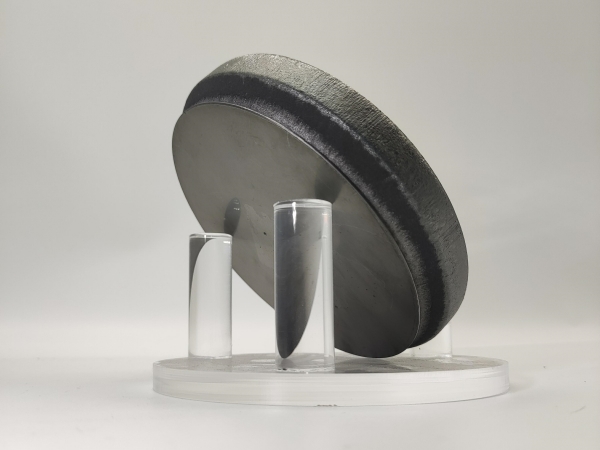
With the rapid development of power electronics, radio frequency (RF) devices, and high-temperature/high-voltage applications, silicon carbide (SiC), a wide-bandgap semiconductor material, has emerged as a critical material in the semiconductor industry. Due to its high breakdown voltage, high thermal conductivity, and excellent high-temperature performance, SiC is increasingly adopted in advanced devices. Among SiC substrates, semi-insulating (SI) SiC substrates are particularly important because they effectively suppress parasitic currents and enhance device performance, especially in RF and microwave applications. Currently, 4-inch SI SiC substrates have become an industrial standard. This article explores their current status, advantages, and future development potential.
SiC is a wide-bandgap semiconductor (bandgap ~3.26 eV depending on polytype), offering several advantages:
High breakdown voltage: suitable for high-voltage power devices;
High thermal conductivity: facilitates efficient heat dissipation;
High-temperature tolerance: ideal for harsh operating environments.
SI SiC achieves high resistivity (typically 109∼1012 Ω⋅cm10^9 \sim 10^{12} \ \Omega \cdot cm109∼1012 Ω⋅cm) through controlled doping (commonly with vanadium), which provides:
Suppression of substrate leakage currents;
Improved Q-factor and power efficiency for RF devices;
A stable insulating environment to minimize parasitic effects.
A 4-inch wafer (100 mm diameter) offers over twice the area of a 3-inch wafer, enabling more devices per wafer and increasing production efficiency.
The growth technology for 4 inch SI SiC wafers has matured, with controllable defect densities and uniformity suitable for industrial use.
Supporting processes—including polishing, dicing, cleaning, and testing—have achieved mass production capability.
4-inch wafers are widely used in power electronics and RF device manufacturing.
Compared with 6-inch wafers, 4-inch wafers have mature production capacity, moderate cost, and better alignment with current market demand.
4-inch wafers strike a balance between wafer area, manufacturing cost, and yield.
Larger wafers can increase device count, but excessive size may lead to higher defect rates; 6-inch wafer yield is still improving.
Power devices: MOSFETs, Schottky diodes, for electric vehicles, power modules, and inverters;
RF devices: low-noise amplifiers (LNAs) and power amplifiers (PAs), for 5G communication and radar systems;
High-temperature and high-voltage applications: aerospace, industrial motor control, and other harsh environments.
As 6-inch SiC wafer technology matures, some power and RF devices may migrate to larger wafers to reduce unit cost.
However, 4-inch wafers will continue to dominate mid- and low-power and RF applications for the foreseeable future.
Defect control in high-quality SI SiC wafers remains critical for cost and device performance.
Technological improvements—including optimized physical vapor transport (PVT) growth, uniform doping, and advanced polishing—can further enhance 4-inch wafer yield.
The growing demand from electric vehicles, 5G communications, and renewable energy will continue to drive the need for SI SiC substrates in high-frequency, high-power, and high-temperature applications.
RF microwave devices and monolithic microwave integrated circuits (MMICs) may stimulate further optimization of SI SiC wafers.
The 4 inch semi-insulating SiC substrate has become an industrial standard due to:
Technological maturity: stable wafer growth and processing;
Market demand alignment: optimal balance of area and device output;
Industry chain compatibility: well-adapted equipment and processing lines;
Performance-to-cost balance: meets the requirements of power and RF devices.
In the future, as wafer sizes increase and processing techniques improve, 4 inch SI SiC will remain important in mid- and low-power RF applications, while paving the way for wider adoption of 6-inch and larger wafers.
The surface flatness and lattice integrity of silicon carbide substrates are core substr...
IntroductionAs the core cornerstone of the third-generation semiconductor industry, sili...
The classic Surface Activated Bonding (SAB) process fundamentally solves the core therma...